Value Chain Financing

Discover how our Value Chain Financing techniques are transforming Rural Livelihoods

Through GoatShala, we drive the rapid economic transformation of marginal farmers using the world’s first IoT-enabled goat-rearing program. For the first time, we have unlocked credit and insurance for goats through technology, turning an informal livelihood into a structured enterprise. Each farmer earns over ₹1 lakh within 12 months, supported by modern goatsheds, digital monitoring, and financial inclusion. GoatShala stands as a breakthrough model of dignity, innovation, and rural prosperity.

Goatshala: Her Dreams, Her Income, Her Future

What Inspired Us

Millions of rural women sustain their households through small-scale livestock rearing, yet their labour remains unseen and unsupported. During our field visits, we met women keeping two or three goats in cramped, unhygienic spaces, often their only safety net during emergencies, sold to cover medical bills or school fees. Without veterinary care, proper shelter, or insurance, these goats frequently fell sick or died, erasing what little security the women had.

Despite being rooted in traditional knowledge and capable of generating up to ₹1 lakh a year, goat rearing remains an informal, high-risk livelihood. Banks avoid financing it due to poor traceability, and insurers stay away because of high mortality rates. GoatShala was created to change this: formalizing a neglected livelihood through design, finance, and community innovation so rural women can turn their goats into sustainable assets rather than emergency lifelines. Built on years of fieldwork with veterinarians, agri-financiers, and grassroots organisations, GoatShala combines knowledge, finance, and technology to make goat rearing truly empowering.
Our Solution

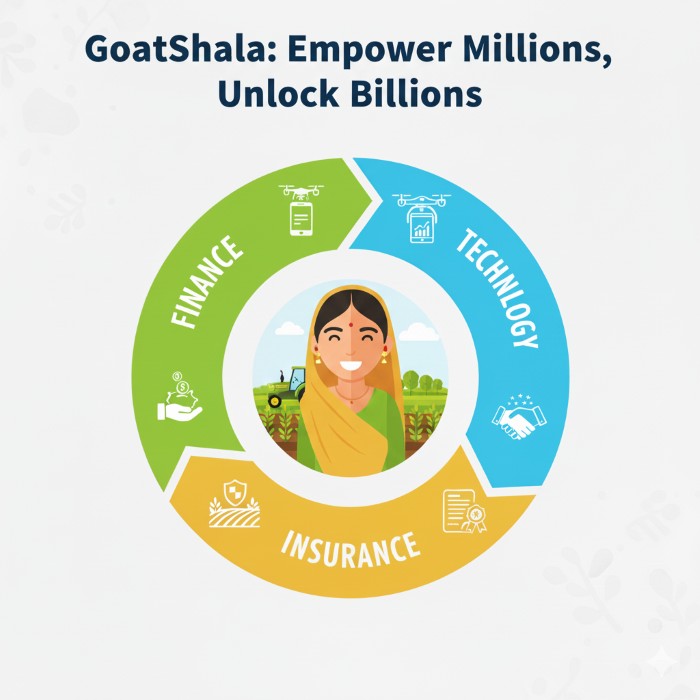
GoatShala empowers rural women to build sustainable livelihoods through a structured 10+1 goat model. Each goat is tagged with an IoT-enabled ID for real-time tracking of health and productivity, enabling access to credit and insurance. With improved management, veterinary support, and market linkages, women farmers can earn over ₹1,00,000 annually within just 12 months, turning a traditional practice into a scalable and secure rural enterprise.

Our Innovative Model

Farmers, especially women, are often excluded from formal credit systems due to low CIBIL scores, irregular income, and lack of financial history. For women, the challenge is deeper; without land or fixed assets in their name, they remain ineligible for collateral-based loans despite being primary contributors to farm and livestock work.

GoatShala bridges this gap by turning goats into bankable, traceable assets using IoT-based tagging and digital records. This enables banks and NBFCs to confidently offer collateral-free loans. By linking livestock with structured credit and data-driven monitoring, GoatShala helps farmers expand operations, stabilize income, and turn goat rearing into a sustainable business earning ₹1 lakh annually.

Technology makes GoatShala financeable, insurable, and scalable. We have built the world’s first IoT-based goat traceability system that brings transparency and trust to the entire value chain. Each goat wears a lightweight IoT tag that tracks its location, temperature, and activity, while every shed is equipped with a receiver and camera that send this data to our central dashboard, GoatGrid.

GoatGrid connects all stakeholders—farmers, veterinarians, banks, insurers, and government agencies—on one platform. If a goat shows signs of illness, the system alerts nearby vets for quick care, reducing mortality. In case of a death, the camera captures proof for insurance validation. Our Krishi Setu app stores all farmer and herd information for ground partners. Together, these tools enable real-time monitoring, ensure data accuracy, and make goat rearing transparent, efficient, and investment-ready.

In rural areas, insurance for goats is almost non-existent because companies view it as high-risk. Goats often die from disease or poor management, and without reliable proof of identity, insurers hesitate to provide coverage. In the rare cases where insurance is offered, the claim process is cumbersome.

GoatShala solves this continuous tracking of goat’s its health and activity through IoT Bluetooth tags. In case of death, the system automatically alerts the receiver unit, which activates the shed camera to capture time-stamped proof for verification. This transparent, tamper-proof data allows insurance companies to validate claims instantly, reducing delays and rebuilding trust between farmers and insurers.

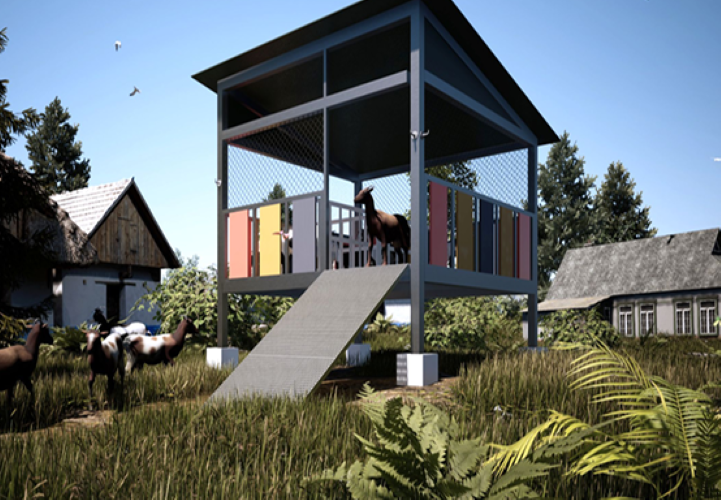
The GoatShala Shed is a modular, elevated structure built next to farmers’ homes or fields, based on the training and guidance we provide. This makes goat rearing easy to manage and fits smoothly into their daily routine without adding extra workload or taking them away from household responsibilities.

The raised shed keeps goats off waste, reducing infections and improving health while enabling easy manure collection for fertilizer or sale. Built in an IKEA-style modular design, it installs quickly, needs no land development, and is easily movable. Each unit includes a receiver and camera that collect real-time IoT data to monitor goat health and activity. It has separate sections for kids, adults, and sick goats, with space for chickens below and provisions for solar panels to add extra income.

Unit Economics

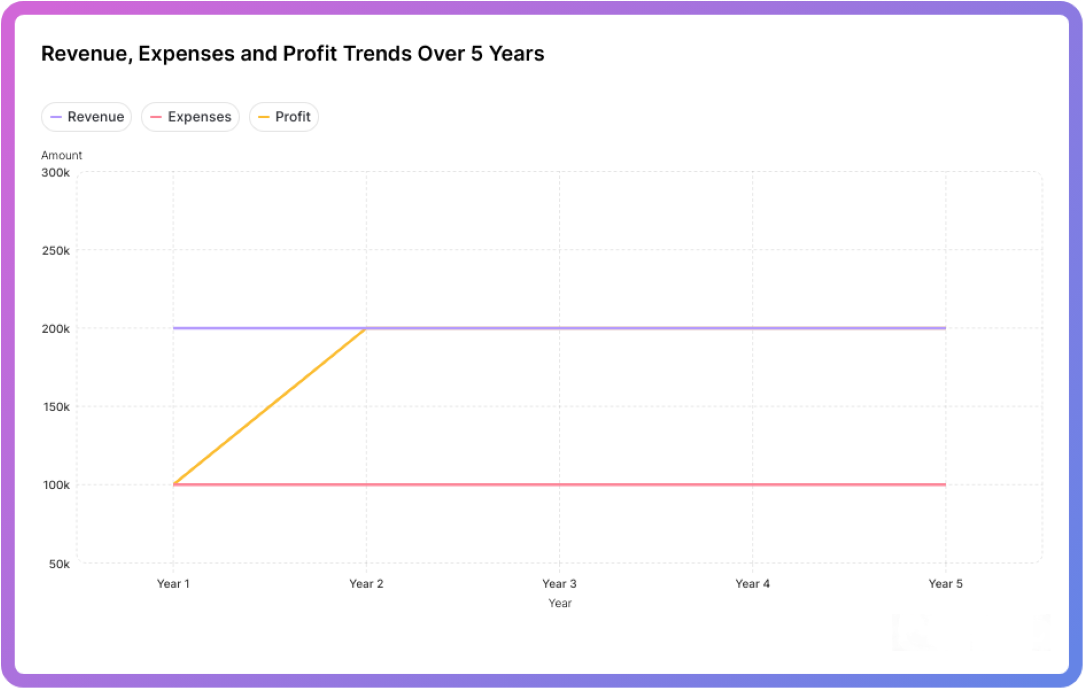
Revenue, Expenses and Profit

Revenue of ₹2 lakh from goat rearing activities offsets ₹1 lakh in rearing and loan repayment expenses, yielding a ₹1 lakh net profit in the first year. Income from goats may reach over ₹1 lakh annually in the first five years, rising to over ₹2 lakh later, with an additional ₹1 lakh from chickens. Financing offers low-interest loans at 1% monthly (12% annually), Mudra loans for women farmers, parametric insurance, and government scheme support.

Unit Economics

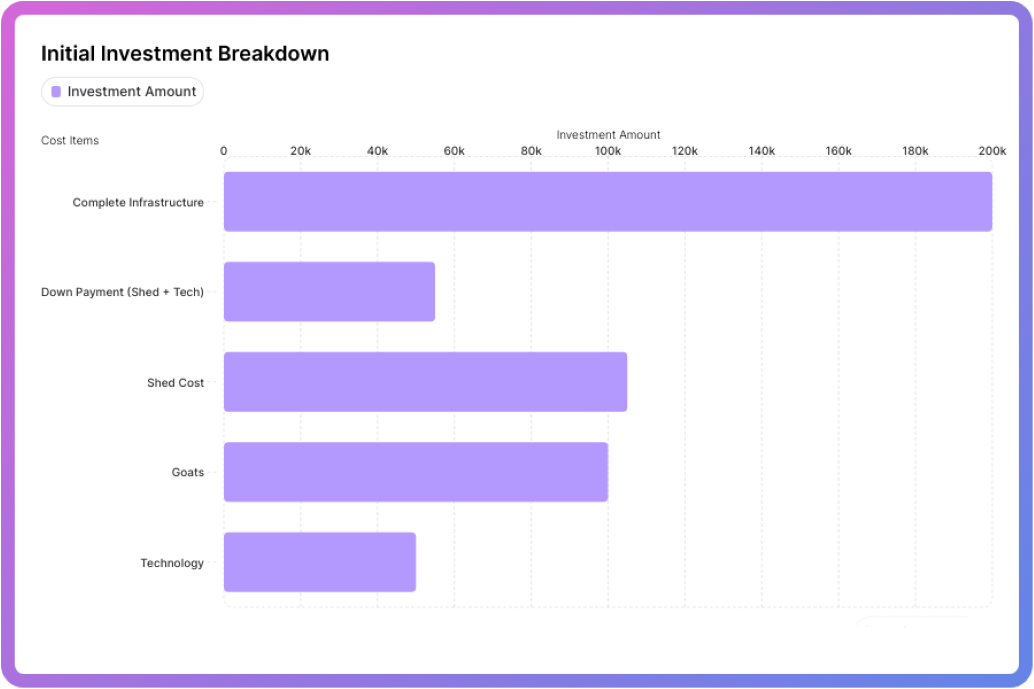
Initial Investment Breakdown

GoatShala's unit economics for backyard goat farming involve an initial ₹55,000 investment for a 10x10 ft eco-model shed (₹1,05,000 including transport/packaging) and ₹50,000 for 10+1 goats with repayable IoT technology. It includes Bluetooth trackers for health/temperature monitoring via a mobile app, parametric insurance for natural loss protection, and provisions for 100 chickens and 1 kW solar. Additional costs are ₹1 lakh for goats, ₹1.15 lakh for the shed, ₹50,000 for tracker/receiver with software, and ₹2 lakh for infrastructure, with potential subsidies.

×

FAQs

Yes, breed selection is always done according to your local climate, disease patterns, and fodder availability. While GoatShala has a standard set of high-performing breeds, we make adjustments when a particular region is known to support a specific breed better. Our goal is to ensure higher survival and faster weight gain, so the breed is matched to your environment-not chosen randomly.

Goats provided under GoatShala are typically 6-8 months old, which is the ideal age to adapt quickly and start gaining weight immediately. At this age, goats are healthy, active, and not yet pregnant, ensuring proper growth. Their weight usually falls within the 12-18 kg range depending on the breed. All goats undergo a health check before delivery.

Yes, farmers are allowed to select goats during delivery. While visiting the supplier farms is restricted the final selection happens at the delivery point in the presence of our field team. Farmers can check activity levels, body condition, and health card details before accepting the goats.

If your current shed meets basic standards for hygiene, space, ventilation, and safety, it may still function, but most traditional sheds lack the modern design needed for healthier, more productive goats. Our shed offers state-of-the-art infrastructure that improves comfort and reduces disease risks. During inspection, our team will show you any gaps in your existing setup and explain how our advanced shed design provides a more reliable and efficient solution for long-term results.

The suggested shed cost includes high-quality flooring, roofing, ventilation, and safety features that directly reduce disease risk and support faster, healthier goat growth. These benefits are difficult to achieve with basic, low-cost structures. Farmers are welcome to build their own sheds using local materials, and this can certainly lower the upfront cost. However, our engineered shed design consistently delivers better long-term results, and following our recommended standards ensures your goats get the safest and most productive environment possible.

Yes, all goats are fully vaccinated before delivery. All vaccinations are documented in the health card that the farmer receives at delivery.

Yes. The shed design is made to keep goats safe from snakes and wild animals. The flooring keeps the goats above ground, and the structure stays dry and clean. The shed also has a proper door that can be closed and locked, so the goats remain safely inside at night or whenever needed.

Yes. If any new disease spreads in your area, our team will support you immediately. The PashuSakhi (local animal healthcare network) in your village will visit, check the goats, and guide you on what to do. In case of any goat getting sick, Pashusakhi will be notified and it will provide the goat with necessary medicines.

Yes, if your existing shed is approved by our team, the bank can release the loan only for goat and technology purchase. The shed component is only needed when a farmer does not have adequate housing for the animals.

Currently, there is no active subsidy scheme linked to this specific structured goat-rearing model. Subsidies depend on state-level livestock programs, and many of these schemes focus on traditional setups, not tech-enabled or bank-financed projects. If new subsidies are introduced in your region, GoatShala will guide farmers on eligibility and application.

No, farmers cannot receive the loan amount directly into their hands. To prevent misuse of funds and ensure proper utilization, the amount is disbursed directly to the goat supplier or shed contractor (if applicable). This is a standard guideline followed by all banks to protect both the farmer and the project.

EMI repayment usually begins one cycle after the loan disbursal, as per the bank’s policy. Since goat farming income starts gradually, the EMI may seem high initially. However, the model is designed so that by the time goats reach market weight, farmers can comfortably repay EMIs through periodic sale of goats or kids.

The first few months are focused on growth, vaccination, and adaptation. To ease the burden, GoatShala provides guidance on early income options such as manure sales, fodder savings, and staggered selling of older goats if available. Our financial planning ensures farmers do not face pressure in the initial period.

Scroll